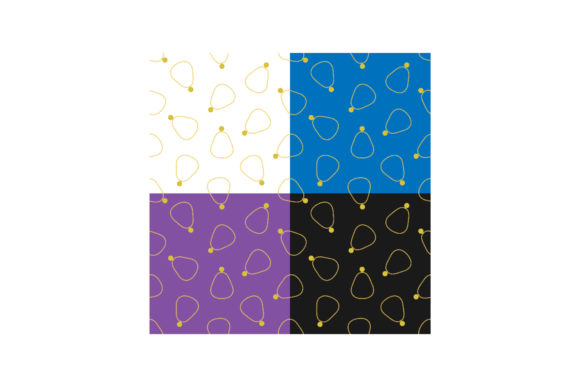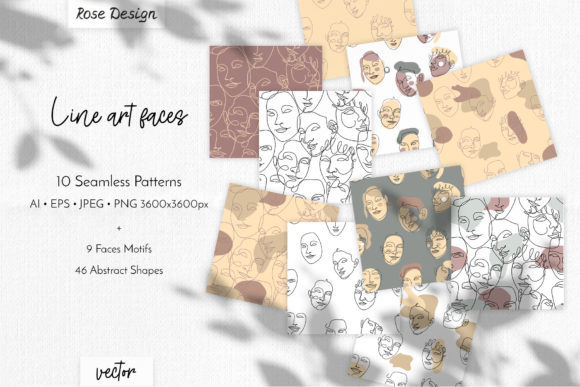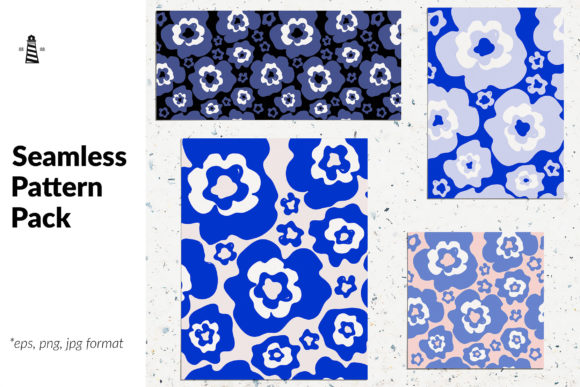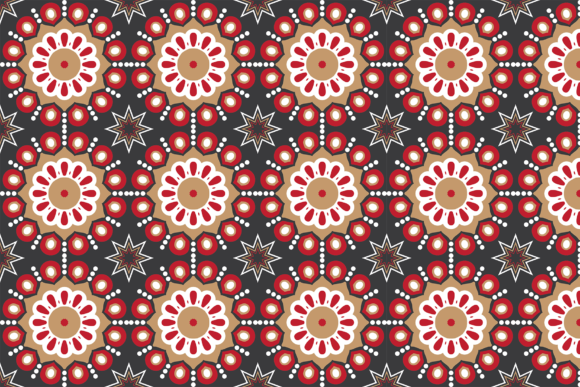
Traditional Vector Patterns
Traditional Vector Patterns refer to digitally created, scalable graphic motifs rooted in historical textile, tile, wallpaper, and decorative arts traditions—such as paisley, damask, toile, ikat, chintz, or Art Nouveau flourishes. Unlike raster-based repeats, these patterns are built using vector paths in software like Adobe Illustrator, enabling infinite scalability without quality loss. When delivered as EPS files, they retain full editability of strokes, fills, and anchor points, making them suitable for professional print production, branding applications, and digital design workflows.
Why Consider Traditional Vector Patterns?
Designers, product developers, and small-business owners often seek Traditional Vector Patterns when they need repeatable, culturally resonant motifs that uphold both aesthetic continuity and technical precision. These patterns appeal across industries—from fashion and home décor to packaging and stationery—where heritage-inspired visuals reinforce brand identity or evoke specific emotional responses (e.g., elegance, craftsmanship, nostalgia). Their vector format ensures adaptability: a single pattern can scale from business card borders to billboard-sized wall murals without pixelation or re-rendering.
Key Benefits
- Scalability and resolution independence: EPS files preserve mathematical path definitions, allowing seamless resizing for any output medium—print, web, embroidery digitizing, or laser cutting.
- Editability and customization: Designers can modify colors, spacing, rotation, or individual elements directly in vector-editing software, supporting iterative refinement and brand-specific adaptation.
- Print readiness: EPS is widely supported by commercial printers and RIP (raster image processor) systems, especially for spot-color workflows common in textiles and packaging.
- Seamless tiling capability: Well-constructed Traditional Vector Patterns include precise alignment of tile edges, eliminating visible seams when repeated across large surfaces.
- Cultural and stylistic coherence: These patterns offer immediate visual shorthand for eras, regions, or design movements—valuable for storytelling in branding or editorial contexts.
Tradeoffs and Practical Considerations
While powerful, Traditional Vector Patterns come with constraints worth evaluating before adoption. First, EPS is a legacy format: newer tools may offer limited native support, and some cloud-based platforms do not render EPS previews reliably. Users must confirm compatibility with their primary design or production software. Second, true seamlessness requires deliberate construction—not all “traditional-style” vector downloads meet this standard; misaligned tiles become apparent at scale or in physical production.
Color fidelity also demands attention. EPS files may embed color profiles inconsistently, particularly when moving between RGB and CMYK workflows. Designers preparing for print should verify color mode, assign appropriate profiles, and test output on calibrated devices. Additionally, licensing terms vary significantly: some Traditional Vector Patterns are royalty-free for commercial use, while others restrict application scope (e.g., prohibiting resale as standalone digital assets or use in template marketplaces).
Finally, vector complexity affects performance. Highly detailed patterns—especially those with thousands of anchor points or nested clipping masks—can slow rendering in complex documents or cause export issues. Simplifying paths or using linked symbols may be necessary for large-scale projects.
When Traditional Vector Patterns Are a Strong Fit
This approach excels in scenarios where heritage aesthetics intersect with technical precision. For example, a textile manufacturer developing a new line of luxury scarves benefits from damask or brocade-inspired Traditional Vector Patterns that translate cleanly to jacquard loom programming. Similarly, a boutique hotel chain refreshing its interior branding might use seamless toile or chintz vectors for custom wallpaper, upholstery, and signage—all derived from the same editable source.
Brands pursuing long-term visual consistency also gain value. A craft beverage company adopting an Art Deco–inspired label system can extend one cohesive pattern across bottle wraps, coasters, and website backgrounds, ensuring recognition across touchpoints. In education or publishing, illustrators and educators selecting Traditional Vector Patterns for historical or cultural illustration projects benefit from accurate stylistic representation without compromising reproducibility.
When Alternatives May Be More Appropriate
For time-sensitive web projects—such as animated background textures or responsive CSS repeats—SVG or CSS-generated patterns often provide better performance, smaller file sizes, and broader browser support than EPS. Likewise, designers working exclusively in Figma or Sketch may find native SVG libraries more interoperable than EPS imports, which require conversion and potential layer flattening.
If photorealistic texture is required—like subtle paper grain beneath a traditional motif—combining vector patterns with high-resolution raster overlays (e.g., PNGs with transparency) yields richer results than vector-only solutions. And for mass-market digital products—such as Canva templates or Shopify themes—licensing restrictions on many EPS-based Traditional Vector Patterns may conflict with platform redistribution policies, making royalty-free SVG or subscription-based pattern services safer options.
Emerging generative tools also present alternatives. Some AI-assisted design platforms now produce customizable traditional-style repeats in real time, offering variation on demand. While these lack the hand-crafted nuance of professionally drawn Traditional Vector Patterns, they suit exploratory phases or low-stakes prototyping where speed outweighs archival fidelity.
Making an Informed Decision
To determine whether Traditional Vector Patterns align with your goals, begin by clarifying three criteria: use case, technical environment, and longevity requirements. Ask: Will this pattern appear primarily in print or digital? Does your team maintain vector-editing capability—or rely on external vendors who may prefer modern formats? Do you need the pattern to remain usable across multiple product generations, or is it for a short-term campaign?
Next, inspect sample files closely. Zoom into tile boundaries to verify seamlessness. Open the EPS in Illustrator and test recoloring or scaling to assess editability. Review license documentation for permitted outputs, attribution requirements, and exclusivity clauses. If sourcing from third-party marketplaces, prioritize vendors who provide preview grids, color mode specifications, and version history.
Finally, consider workflow integration. If your production pipeline relies heavily on PDF/X-4 or automated preflight tools, confirm the EPS adheres to ISO 32000 standards and contains no unsupported PostScript constructs. When collaborating across teams, share vector patterns alongside clearly documented usage guidelines—including recommended minimum tile size, safe margins, and compatible color spaces.
Traditional Vector Patterns remain a durable choice where authenticity, scalability, and craft meet functional demand. They are not universally optimal—but for projects valuing historical resonance, precise reproduction, and long-term asset reuse, they continue to deliver measurable utility. Evaluating them against your specific constraints—not abstract ideals—ensures the decision supports both creative intent and operational reality.