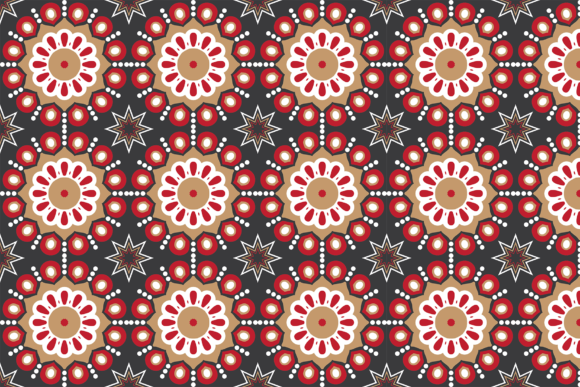
Batik Seamless Vector Patterns: Timeless Tradition, Modern Design Flexibility
For designers, textile artists, product developers, and craft entrepreneurs, finding authentic cultural motifs that translate seamlessly across digital and physical media is both a creative opportunity and a practical challenge. Batik Seamless Vector Patterns meet that need precisely—offering the intricate, symbolic beauty of traditional Javanese batik in scalable, editable, production-ready formats like EPS files. Unlike raster images or isolated motifs, these patterns tile infinitely without visible seams, making them ideal for repeat applications on fabric, packaging, web backgrounds, branding assets, and more.
Traditional batik is more than decoration—it’s a storytelling medium rooted in centuries-old wax-resist dyeing techniques, regional symbolism, and artisanal precision. Translating that depth into digital design tools requires fidelity to form, proportion, and cultural nuance—while also enabling technical adaptability. That’s where Batik Seamless Vector Patterns bridge heritage and utility: they preserve the visual language of motifs like parang rusak, kawung, truntum, and ceplok, while delivering them as clean, layered, CMYK- or RGB-ready vector assets.
Why Designers Struggle with Authentic Batik in Digital Workflows
Many professionals encounter roadblocks when integrating batik into commercial projects:
- Resolution dependency: Scanned or photographed batik repeats often pixelate at large scales—unsuitable for banners, wall graphics, or high-DPI print.
- Non-seamless tiling: Manually editing repeats introduces visible edges, breaks rhythm, and undermines professional polish.
- Cultural misrepresentation: Simplified or stylized versions risk flattening meaning—e.g., using parang (a royal motif historically restricted to nobility) without context or respect.
- Editing limitations: Raster files resist color adjustments, resizing, or isolation of individual elements—slowing iteration and customization.
These aren’t just technical inconveniences—they impact brand authenticity, production timelines, and cross-cultural integrity. A fashion label launching a batik-inspired capsule collection needs consistency across silk scarves, woven labels, and e-commerce banners. A stationery brand introducing Javanese-themed wedding suites requires precise color matching and motif scaling across foil-stamped cards and digital invites. In both cases, Batik Seamless Vector Patterns serve as foundational, trustworthy assets—not just decorative add-ons.
How Batik Seamless Vector Patterns Solve Real-World Needs
The value lies not in novelty, but in reliability. Each pattern is built with intentional spacing, balanced negative space, and mathematically precise tile boundaries—ensuring flawless repetition at any scale. Because they’re delivered in EPS format (and commonly paired with AI or SVG variants), users retain full editability: adjust stroke weights, recolor individual layers, extract single motifs for logos or icons, or combine elements into custom composites.
Consider three common use cases:
- Fashion & Textile Production: Designers import Batik Seamless Vector Patterns directly into CAD software for digital fabric printing. The vector nature ensures crisp output on silk, cotton, or linen—even at 300+ DPI. Color separations for screen printing are simplified, and motif alignment across garment panels remains consistent.
- Branding & Packaging: A wellness brand launching an Indonesian-inspired tea line uses a subtle kawung-based pattern as a background texture on boxes and labels. With vector scalability, the same file works for a 2-inch sticker and a 48-inch retail display—no reworking or quality loss.
- Digital Product Design: UI/UX designers incorporate low-opacity batik textures as layered CSS backgrounds or Figma overlays. Because vectors export cleanly to web formats, performance stays optimal—no heavy image loads or blurry scaling on retina displays.
Practical Considerations When Selecting or Using These Patterns
Not all Batik Seamless Vector Patterns are created equally. Prioritize sources that emphasize cultural accuracy and technical rigor:
- Verify motif authenticity: Look for documentation—ideally referencing regional origins (e.g., Solo vs. Yogyakarta styles), historical usage, and symbolic meaning. Reputable providers often include brief cultural notes alongside each pattern.
- Check tile dimensions and bleed: Seamless doesn’t mean arbitrary. Opt for patterns built on standard tile ratios (e.g., 12×12 inches or 3000×3000 px at 300 DPI) with proper overlap handling—critical for textile mills requiring precise repeat measurements.
- Confirm color model readiness: If printing is involved, ensure EPS files support CMYK swatches or spot-color definitions (Pantone). For digital-only use, RGB-optimized versions prevent unexpected shifts on screens.
- Evaluate layer organization: Well-structured files separate background, main motif, and accent lines—enabling selective recoloring or simplification without destructive editing.
Also consider your workflow stage. A freelance illustrator might use Batik Seamless Vector Patterns as base elements to hand-enhance with brush textures or watercolor overlays. A corporate design team may integrate them into a locked-down brand asset library with strict usage guidelines—especially around culturally sensitive motifs. Both approaches are valid; the vector foundation supports flexibility without compromising integrity.
Who Benefits Most—and How They Use It Differently
Textile designers treat these patterns as production-grade inputs—importing directly into Kornit or EFI Fiery workflows, adjusting scale per fabric width, and testing drape behavior through simulation tools. Their priority is precision, repeatability, and compliance with mill specifications.
Graphic designers and marketers focus on narrative alignment. They pair a truntum pattern (symbolizing love and unity) with wedding-related messaging, or select muted earth tones from a ceplok set to reflect sustainability values. Here, context and emotional resonance drive selection—not just aesthetics.
Educators and cultural practitioners use Batik Seamless Vector Patterns as teaching tools—zooming into vector paths to explain symmetry, repetition logic, or wax-resist logic in classroom demos. Clean vectors make abstract concepts visually tangible for students learning traditional crafts in digital environments.
In every case, the core advantage remains: Batik Seamless Vector Patterns remove friction between inspiration and execution—so you spend less time troubleshooting tiles and more time honoring tradition through thoughtful application.
Ultimately, this isn’t about importing “exotic” visuals. It’s about accessing a living craft tradition with the respect it deserves—and the technical clarity modern design demands. Whether you’re developing a limited-edition scarf line, designing a museum exhibition identity, or crafting culturally grounded educational materials, starting with well-built, seamless, vector-based batik patterns gives you a foundation that’s both meaningful and measurable in outcome.