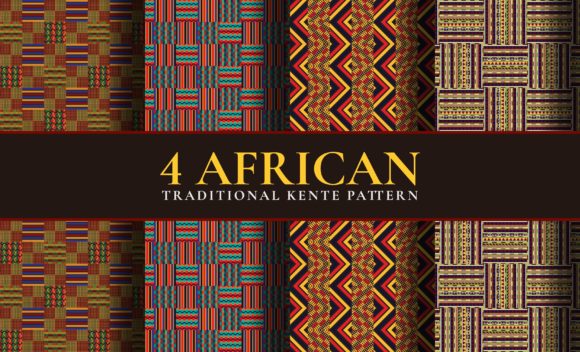
Kente Cloth Patterns: Meaning, Craft, and Digital Design Applications
Kente Cloth Patterns originate from the Ashanti and Ewe peoples of Ghana, where each motif carries intentional meaning—conveying proverbs, historical events, social status, or philosophical ideas. Unlike mass-printed textiles, traditional Kente is handwoven on narrow looms using silk or cotton threads, with patterns built through precise interlacing of weft strips. The result is not just visual rhythm but layered cultural syntax: a geometric arrangement that speaks before it’s read.
What distinguishes Kente Cloth Patterns from other African textile traditions—like Adinkra symbols (which are stamped, not woven) or Nigerian Aso Oke (a thicker, stiffer fabric used for ceremonial garments)—is its structural duality: each pattern functions both as decoration and as encoded language. For example, the “Eban” (safety) motif features interlocking squares suggesting protection, while “Fathia Fata Nkrumah” honors unity across cultures through alternating bands of red, green, and yellow. This depth makes Kente Cloth Patterns especially valuable for designers seeking culturally grounded, symbolically rich visual assets—not just aesthetic repetition.
How Digital Kente Cloth Patterns Fit Into Modern Graphic Design Workflows
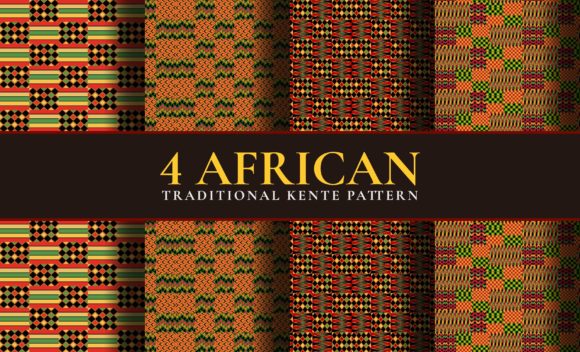
Digital adaptations of Kente Cloth Patterns have grown in demand among designers creating branding, apparel, editorial layouts, and event materials. But not all digital versions serve the same purpose. Some are low-resolution JPEGs intended only for web previews; others are vector-based, scalable, and built for professional output. The version described here—100 hand-drawn, high-quality patterns processed in Adobe Illustrator—falls into the latter category. Each design is created at 300 PPI, 4167 × 4167 pixels, supporting print use up to large-format banners or fabric printing without pixelation.
This matters because resolution and format directly affect usability. A raster-only set (e.g., JPGs alone) limits flexibility: resizing risks blurriness, and editing individual elements isn’t possible. In contrast, including an AI file means users can recolor motifs, isolate sections, adjust spacing, or integrate components into larger compositions—essential for custom apparel lines, packaging, or responsive web graphics. The inclusion of seamless tiling capability further expands utility: these patterns can wrap around product mockups, fill backgrounds uniformly, or repeat across textile simulations without visible seams.
Comparing Formats: When Vector-Based Kente Cloth Patterns Add Real Value
Designers evaluating resources often weigh tradeoffs between convenience and control. Free online pattern libraries may offer dozens of Kente-inspired tiles—but many lack transparency about origin, licensing, or technical specs. Others use AI-generated approximations that flatten cultural nuance into generic geometry. Hand-drawn, Illustrator-processed Kente Cloth Patterns avoid those pitfalls by preserving intentional line weight, deliberate asymmetry, and rhythmic variation found in authentic weaving.
That said, this format isn’t universally optimal. If your project requires rapid prototyping for internal presentations—or if you’re designing for small-screen UI elements where fine detail won’t render—high-resolution vectors may be over-engineered. In those cases, a smaller, optimized PNG set could suffice. Likewise, if you need animated or interactive pattern behavior (e.g., parallax-scrolling backgrounds), static files—even high-res ones—won’t meet that need without additional development work.
The ZIP delivery method also reflects practical workflow considerations. Compressing four image variants (likely different colorways or layout variations) alongside the editable AI source ensures consistency across outputs. Extraction via WinRAR, WinZIP, or native OS tools keeps barriers low—no specialized software required beyond standard design applications. Still, users unfamiliar with vector editing may need to invest time learning Illustrator basics to fully leverage the AI files. That learning curve is a real factor—not a limitation of the resource itself, but a consideration in decision-making.
Practical Use Cases and Realistic Limitations
These Kente Cloth Patterns suit several concrete scenarios:
- Apparel and Merchandise Design: Because they’re seamless and scalable, they integrate cleanly into fabric simulation tools (like Clo3D or Browzwear) or direct-to-garment print workflows. Designers developing capsule collections for cultural celebrations, university events, or heritage-focused brands can adapt motifs without recreating structure from scratch.
- Educational and Editorial Projects: Teachers, publishers, or museum designers can use individual motifs to illustrate textile history, symbolism, or cross-cultural design principles—paired with accurate context rather than decorative abstraction.
- Brand Identity Systems: When aligned with mission-driven values (e.g., community, resilience, intergenerational knowledge), selected Kente Cloth Patterns can anchor visual language—not as superficial ornament, but as meaningful anchor points within logos, typography treatments, or environmental graphics.
However, limitations exist. These files do not include licensing for commercial resale of the patterns themselves (e.g., selling them as standalone clipart). They’re intended for end-use integration—not redistribution. Also, while the designs are hand-drawn, they’re interpretations—not archival reproductions of specific royal or ceremonial weaves. Users incorporating them into culturally sensitive contexts should consult primary sources or cultural advisors to ensure appropriate usage and attribution.
Making an Informed Choice: When to Choose This Set—and When to Look Elsewhere
This collection stands out for designers who prioritize authenticity of process (hand-drawn → Illustrator refinement), technical readiness (print-grade resolution + vector flexibility), and intentional composition (not algorithmic repetition). It’s well-suited for professionals balancing creative freedom with production reliability—especially when working under deadlines that don’t allow for building patterns from scratch.
It may be less ideal for hobbyists needing plug-and-play solutions with no editing required—or for teams already invested in collaborative cloud platforms that don’t support native AI file sharing. Similarly, if your goal is photorealistic textile rendering (e.g., simulating thread sheen, weave texture, or fabric drape), you’d need supplemental 3D material maps or PSD overlays—not included here.
Alternatives worth considering include licensed textile databases like PatternBank or Spoonflower’s designer marketplace—if you need broader stylistic variety or ready-made physical swatches. For academic or archival reference, the University of Michigan’s Kente Collection or the British Museum’s textile archives provide high-fidelity documentation—but not editable design files.
Final Considerations Before Download or Purchase
Ask yourself: Do I need scalability and editability—or is static imagery sufficient? Will this support print, web, or both? Am I integrating it into a larger system where consistency across formats matters? Does my use align with respectful, informed engagement with the tradition behind Kente Cloth Patterns?
If the answer leans toward intentionality, adaptability, and fidelity to craft—this set offers measurable advantages over generic alternatives. Its value lies not in quantity alone (100 patterns), but in how each one was developed: with attention to proportion, rhythm, and symbolic resonance—and prepared for real-world design constraints. That preparation saves time, reduces revision cycles, and supports more thoughtful outcomes—whether you’re designing for yourself, family, friends, or clients who value both aesthetics and meaning.