Kente Cloth Patterns - Digital Paper
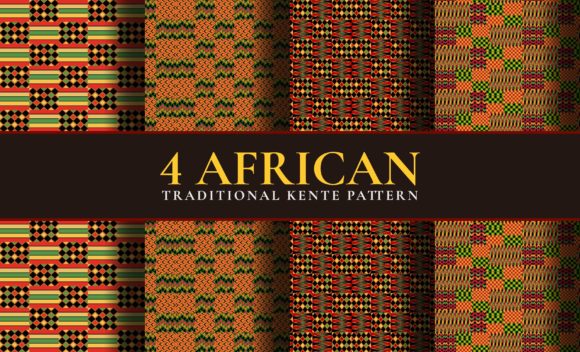
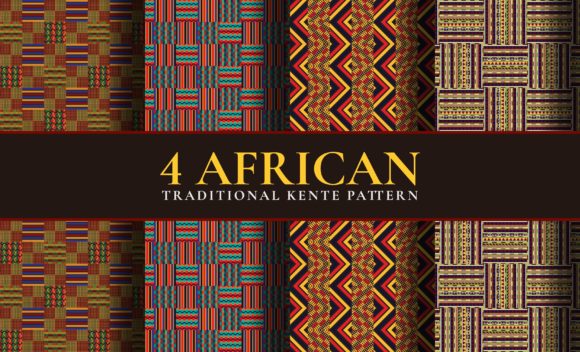
Authentic Kente cloth carries centuries of West African heritage—each pattern a visual language of proverbs, status, history, and identity. Today, that legacy is finding new life—not on looms in Ghana, but on digital canvases worldwide. Kente Cloth Patterns - Digital Paper bridges tradition and technology: a curated set of 100 hand-drawn, high-fidelity digital assets designed for creators who value cultural resonance alongside creative flexibility.
Why Digital Kente Patterns Matter Now
Designers, educators, marketers, and small business owners increasingly seek culturally grounded visuals—not as static decoration, but as meaningful storytelling tools. Unlike generic geometric or tribal motifs, authentic Kente-inspired patterns carry weight. They signal respect, intention, and awareness. That’s why demand is rising—not for appropriation, but for informed adaptation: patterns used with context, care, and credit.
This shift reflects broader changes in creative workflows. Teams no longer rely solely on stock photo libraries or AI-generated abstractions. Instead, they prioritize assets with clear provenance, editable vector fidelity, and seamless scalability—qualities built into this collection from the start. Each design was crafted by hand, then refined in Adobe Illustrator to ensure precision, consistency, and professional usability.
What’s Inside the Package—and Why It Works
The package includes four distinct, high-resolution digital files—each thoughtfully constructed for real-world application:
- 4167 × 4167 pixels at 300 PPI—ideal for print-on-demand products like apparel, stationery, or wall art without pixelation or scaling compromises;
- Seamless tiling capability—enabling infinite repeats for backgrounds, web textures, packaging wraps, or fabric mockups;
- Native Adobe Illustrator (.ai) file—giving full control over colors, strokes, spacing, and composition for custom edits;
- JPG preview versions—for quick reference, client sharing, or platform uploads where vector support isn’t available.
All files are delivered in a single ZIP archive—lightweight, universally compatible, and ready to extract using standard tools (Windows Explorer, macOS Archive Utility, WinRAR, or 7-Zip). No third-party plugins. No subscription layers. Just clean, immediate access to production-ready assets.
Designed for Real Creative Needs
These aren’t decorative afterthoughts—they’re functional building blocks. A freelance graphic designer might use the Illustrator file to recolor a pattern for a client’s brand palette, then export it as a seamless background for an Instagram story series celebrating Black History Month. An educator could embed a scaled-down version into a slide deck about textile traditions—clear even when projected large. A small-batch apparel entrepreneur might apply the pattern directly to a mockup tool for a limited-run tote bag line, knowing the resolution holds up on both screen and fabric print.
Even hobbyists benefit. You don’t need advanced software knowledge to begin. The JPGs work instantly in Canva, PowerPoint, or Google Slides. The .ai file unlocks deeper customization if your skills grow—or if you collaborate with someone who handles vector refinement. That dual-access approach—simple entry, scalable depth—is intentional. It meets users where they are, not where a template assumes they should be.
Hand-Drawn Integrity Meets Digital Precision
“Hand-drawn” here isn’t a stylistic flourish—it’s a workflow choice with practical impact. Each motif began as ink on paper, preserving organic line variation, subtle asymmetry, and human rhythm often lost in algorithmically generated patterns. Then came the Illustrator stage: vector tracing, alignment refinement, color harmonization, and repeat logic testing—all done manually to preserve integrity while ensuring technical reliability.
This hybrid process delivers something rare: warmth and authenticity, paired with reproducibility. You get the soul of traditional Kente structure—the symbolic interplay of stripes, blocks, and motifs—without sacrificing modern production standards. No placeholder gradients. No ambiguous licensing. No hidden raster layers buried in complex PSDs.
How This Fits Into Evolving Creative Expectations
Today’s users expect more than “pretty pictures.” They want transparency (knowing how and why something was made), adaptability (editing without degradation), and ethical grounding (respectful representation). This collection responds directly: the hand-drawn origin signals craft; the Illustrator foundation enables responsible reuse; the seamless tiling supports sustainable design practices—reducing redundant asset creation across projects.
It also aligns with shifting commerce models. Print-on-demand platforms, Etsy shops, and digital course creators all rely on high-quality, rights-cleared graphics. Rather than licensing restrictive stock assets or commissioning custom illustrations per project, users gain a versatile, one-time investment—scalable across personal, client, and commercial uses (within standard extended license terms).
Practical Tips for Getting Started
You don’t need to overhaul your workflow to begin using these patterns effectively. Try these realistic starting points:
- Test resolution first: Open the JPG in your preferred design app and zoom to 200%. Confirm crisp edges—even at extreme magnification—before committing to large-format output.
- Experiment with color: In Illustrator, use the Recolor Artwork tool to shift the palette toward your brand’s primary hues. Notice how contrast and symbolism shift subtly with each change.
- Layer intentionally: Apply the seamless pattern as a subtle underlay beneath text or photography—not as dominant wallpaper. Cultural motifs often resonate strongest when grounded in purpose, not volume.
- Attribute thoughtfully: If sharing publicly (e.g., social posts, presentations), consider a brief note acknowledging Kente cloth’s origins in Ashanti and Ewe weaving traditions. It takes seconds—and deepens impact.
More Than a Download—A Creative Partnership
Welcome to my graphic store isn’t just a tagline—it reflects how this collection was built: as a resource meant to support, not replace, your voice. These 100 hand-drawn artworks aren’t prescriptive templates. They’re invitations—to reinterpret, combine, scale, simplify, or layer. One user layered three patterns at varying opacities to create a textured header for a nonprofit’s annual report. Another isolated a single motif to serve as a watermark across digital course materials.
If your project needs adjustments—a specific color mode (CMYK vs. RGB), alternate sizing, or format conversion—you’re welcome to reach out. Support isn’t an afterthought; it’s part of the offering. Because great digital assets shouldn’t end at download—they should evolve with your work.
Looking Ahead—Without Overpromising
Will Kente Cloth Patterns - Digital Paper replace physical textiles? No. Should it be used without understanding its roots? Also no. But can it expand access to meaningful visual language for people who lack weaving studios or cultural archives nearby? Yes—responsibly, respectfully, and repeatedly.
The future of cultural design isn’t about digitizing tradition to erase its origins. It’s about building bridges: between generations, disciplines, and geographies. This collection is one such bridge—practical in execution, thoughtful in origin, and open in application. Whether you’re launching a brand, teaching a workshop, designing a website, or simply exploring pattern as personal expression, these files meet you with clarity, quality, and quiet intention.