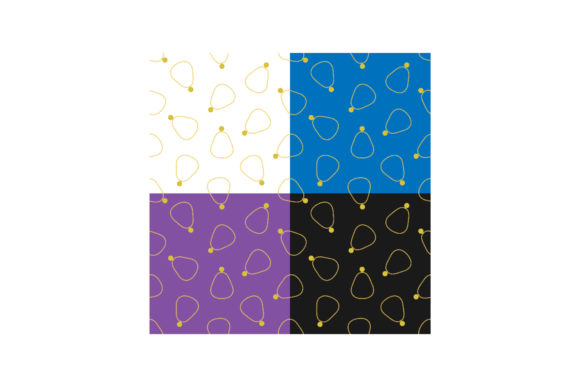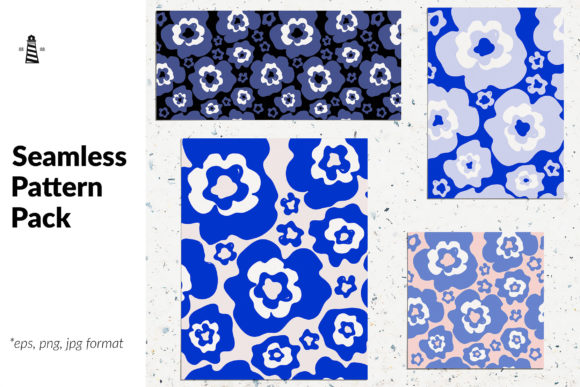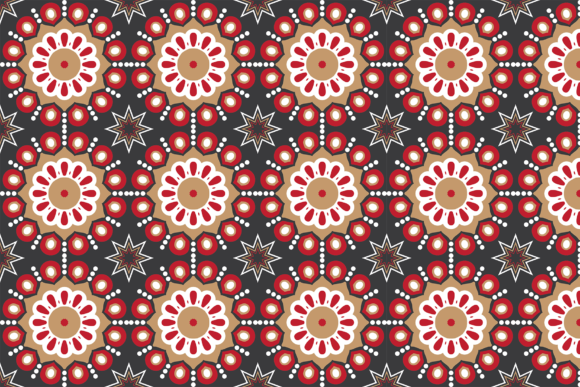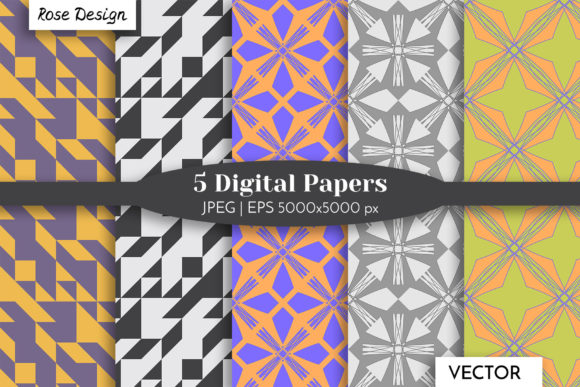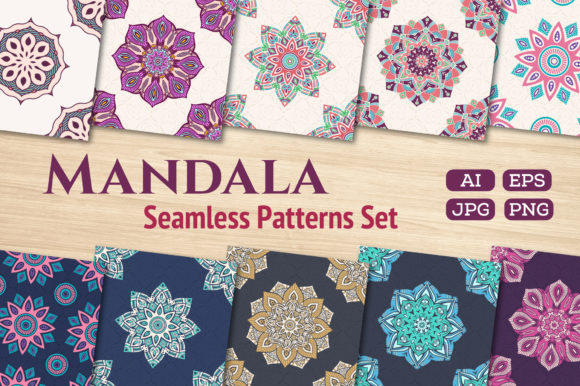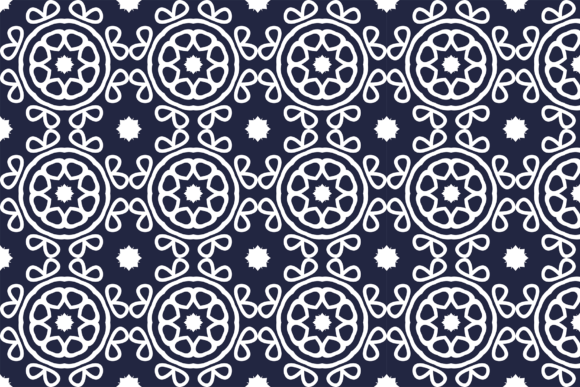
Asian Seamless Vector Patterns
If you’ve ever spent hours trying to tile a delicate cherry blossom motif across a business card without visible seams—or struggled to scale a traditional dragon border from brochure size to billboard size without pixelation—you already know the quiet frustration that Asian seamless vector patterns solve. These aren’t just decorative flourishes; they’re precision-built, infinitely scalable design assets in EPS (and often AI, SVG, PDF) format, crafted to repeat flawlessly in any direction. No gaps. No misaligned edges. No quality loss when enlarged tenfold.
Why “Seamless” and “Vector” Matter—In Practice
“Seamless” means the pattern’s edges align perfectly when repeated horizontally and vertically—like wallpaper that wraps around a room without a visible join. “Vector” means it’s built from math-based paths, not pixels. So whether you’re printing fabric for a boutique clothing line or generating social media banners for Lunar New Year campaigns, your Asian seamless vector patterns retain crispness at any size. That’s why a freelance textile designer in Bangkok uses the same file to mock up a silk scarf onscreen and send it to a digital printer for 2-meter-wide yardage—with zero rework.
Where Real People Reach for These Patterns—Not Just Designers
You don’t need Adobe Illustrator mastery to benefit. Here’s where these assets quietly make work easier, faster, or more culturally resonant:
- Small business owners updating seasonal branding: A tea shop owner in Portland swaps out last year’s generic floral background for an EPS-based Japanese wabi-sabi washi paper pattern on her Shopify homepage banner—then reuses the same file in her email newsletter footer and packaging labels. Consistency across touchpoints? Done. Licensing headaches? Avoided—since she purchased a commercial-use license upfront.
- Educators and curriculum designers: A high school art teacher in Toronto embeds a Chinese cloud motif vector pattern into a slide deck about Ming dynasty aesthetics—not as clipart, but as a subtle, repeating background that reinforces visual literacy without distracting students. She exports the slide as PDF, and the pattern stays sharp even when projected on a gymnasium wall.
- Bloggers and content creators: A wellness writer building a printable meditation journal adds a soft Korean bojagi-inspired geometric pattern as a border element in Canva. Because it’s vector-based, she resizes it freely between A5 journal pages and Instagram story templates—no blurring, no manual re-tiling.
- Print-on-demand sellers: Someone launching a line of yoga mats on Etsy downloads a set of Thai temple silhouette seamless vectors. They layer one over a gradient base, adjust opacity, and export a single print-ready file—knowing the pattern will tile cleanly across a 72-inch mat surface, edge to edge.
What Changes When You Switch From Raster to Vector Patterns
Think about that time you tried to stretch a JPG of bamboo leaves across a presentation slide—and got jagged edges and blurry gaps. With Asian seamless vector patterns, stretching isn’t a compromise—it’s the default. You’re not fighting resolution limits; you’re working with geometry that adapts. That means:
- No more “zooming in to check alignment” before sending to print.
- No need to manually copy-paste tiles to fill large areas—just apply the pattern swatch (in Illustrator, Affinity Designer, or even newer versions of Photoshop with vector smart objects).
- Easy customization: Change the color of every leaf, stem, or wave in one click—because each element is a live path, not flattened pixels.
Choosing the Right Pattern Isn’t Just About Aesthetics
Before downloading or purchasing, ask yourself three practical questions:
- What’s my output context? If you’re designing for web-only use (e.g., website backgrounds), SVG or high-res PNG might suffice—but if there’s even a chance of print, embroidery digitizing, or laser engraving, EPS or AI files give you real flexibility. Not all “Asian seamless vector patterns” include editable layers—some are grouped and flattened. Check the file description: Can you recolor individual motifs? Are cultural symbols accurately proportioned and respectfully rendered?
- What’s my usage scope? A blogger sharing free printables may only need a personal-use license. But if you’re selling physical products featuring the pattern—even as a subtle background on product tags—you’ll need extended or commercial rights. Reputable marketplaces clearly state license terms; skip the ones that bury them in fine print.
- How much control do I need? Some packs include isolated motif files (a single koi, a single lotus) alongside the seamless tile—handy for creating custom compositions. Others offer only the repeating swatch. If you plan to mix patterns (e.g., overlaying a Japanese wave motif over a Korean lattice), layered source files save hours.
Realistic Expectations—What These Patterns Won’t Do
They won’t automatically make your brand “feel Asian.” Cultural resonance comes from thoughtful application—not just slapping a dragon motif onto a tech startup homepage. A café in Melbourne using a Ukiyo-e wave pattern as a subtle border on its menu works because it echoes the ocean-facing location and calm service ethos. The same pattern used aggressively across a fintech dashboard would feel dissonant—not wrong, just mismatched.
They also won’t replace research. If you’re designing for a specific audience—say, Vietnamese-American millennials or Japanese seniors—look beyond surface motifs. Consider color symbolism (white for mourning in many East Asian cultures, not just “minimalist”), spacing preferences (wabi-sabi values asymmetry and negative space), and regional variations (a Chinese phoenix differs significantly from a Korean *bonghwang* in posture and detail).
Getting Started Without Overcomplicating It
You don’t need to build a library overnight. Start small: pick one versatile pattern—a muted Japanese ink wash texture or a clean Korean sans-serif geometric repeat—and use it across two or three assets: your LinkedIn banner, a Canva presentation template, and a printed workshop handout. Notice how much faster layout feels when alignment and scaling aren’t constant variables.
When you do expand your collection, prioritize variety in tone and function—not just style. One pack might specialize in bold, festive motifs for holiday campaigns; another offers subdued, tonal repeats ideal for luxury packaging or editorial layouts. The most useful Asian seamless vector patterns aren’t the flashiest—they’re the ones you reach for repeatedly because they behave predictably, scale honestly, and respect both design craft and cultural context.
One Last Thing: File Management Is Part of the Workflow
Save your EPS files with clear, searchable names: “Japanese_Wave_Seamsless_Vector_Commercial_v2.eps”—not “pattern123.ai”. Tag folders by use case (e.g., “Packaging,” “Web Backgrounds,” “Educational Slides”). Because the real value of Asian seamless vector patterns isn’t just in their beauty or technical precision—it’s in how effortlessly they integrate into your actual workflow, freeing mental space for decisions that matter more than tiling.