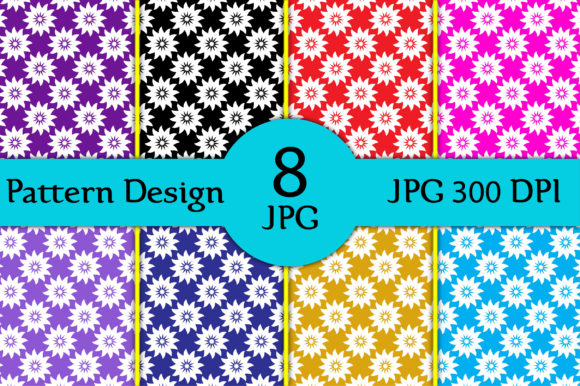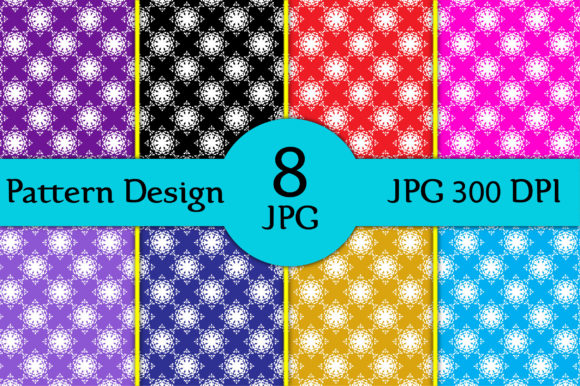
Seamless Patterns Designs V20
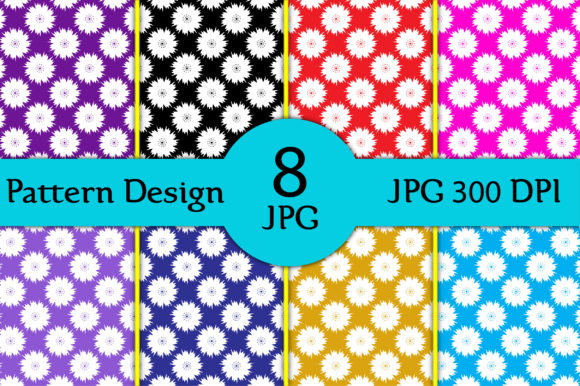
If you're designing custom merchandise—whether for a small batch of branded t-shirts, a line of sublimated throw pillows, or personalized mugs for an online shop—you need patterns that tile flawlessly, scale cleanly, and reproduce vividly on fabric and coated surfaces. Seamless Patterns Designs V20 delivers exactly that: eight high-resolution, repeat-ready digital patterns built specifically for sublimation and direct-to-garment workflows.
Why Seamless Matters—Especially for Sublimation
Sublimation printing relies on heat to transfer dye from paper into polyester fibers—or polymer-coated substrates like mugs and phone cases. Any visible seam, misaligned edge, or pixelated repeat breaks the illusion of continuity and undermines professionalism. Unlike generic clipart or low-res web graphics, every pattern in Seamless Patterns Designs V20 is constructed with precise tile alignment and edge-matching geometry. Each 12 × 12 inch JPG (3600 × 3600 px at 300 dpi) ensures crisp output whether you're printing a full yard of fabric or scaling down to a 4-inch decal.
This isn’t just about aesthetics—it’s about workflow integrity. When your pattern repeats without manual editing, you eliminate hours spent masking seams, adjusting offsets, or troubleshooting banding in RIP software. That consistency translates directly into fewer test prints, less wasted substrate, and faster turnaround for client orders or seasonal product drops.
Designed for Real-World Production, Not Just Mockups
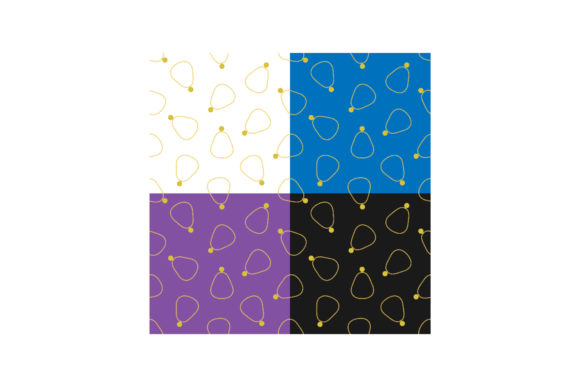
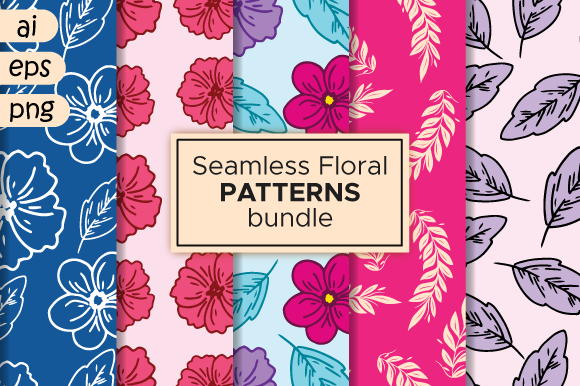
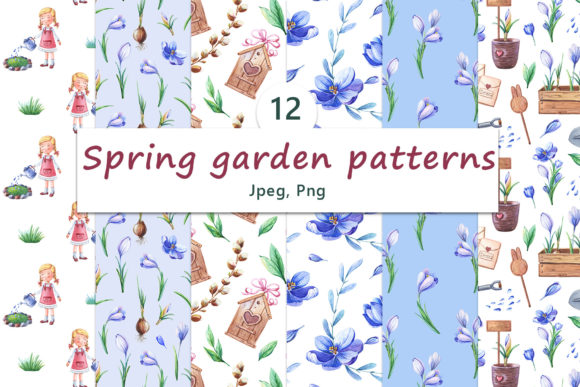
The set includes eight distinct patterns—ranging from organic florals and geometric tessellations to subtle textures and modern abstract motifs. Each one was tested across common production scenarios: printed on polyester pillow covers using a Sawgrass SG1000, applied to ceramic mugs with a Cricut EasyPress 2, and scaled for all-over-print leggings via DTG. They hold detail at both macro and micro levels—no blurring in fine linework, no color bleed at sharp contrast boundaries.
Because they’re delivered as ready-to-use JPGs—not layered PSDs or vector files—they integrate smoothly into platforms like Canva, Adobe Express, Cricut Design Space, and Silhouette Studio. No conversion needed. No compatibility surprises. You unzip the folder, drag a file into your canvas, and begin sizing or recoloring immediately. The “Magic Crafter” label reflects this practicality: it’s optimized for creators who value speed *and* quality—not just one or the other.
Who Benefits Most—and How
Small business owners launching apparel or home goods lines find Seamless Patterns Designs V20 especially valuable during early-stage testing. Instead of commissioning custom patterns (which can cost $200–$500 per design), you get eight production-ready options for a fraction of the time and investment. Use one for your first limited-run t-shirt drop, another for matching tote bags and coasters—building visual cohesion across SKUs without hiring a designer.
Freelance designers and print-on-demand sellers benefit from the consistent technical specs. Knowing each file is 3600 × 3600 px at 300 dpi means no last-minute resizing before uploading to Printful, Gelato, or Gooten. You avoid rejection emails or soft-proofing delays caused by incorrect dimensions or resolution warnings.
Educators and makers running workshops appreciate the plug-and-play reliability. Whether teaching teens how to sublimate on ceramic tiles or guiding adult learners through fabric printing on cotton-poly blends, these patterns serve as predictable, frustration-free starting points. Students focus on technique—not troubleshooting raster artifacts.
Practical Tips for Getting the Most Out of These Files
- For fabric printing: Always check your printer’s recommended color profile (e.g., Epson Vivid or Sawgrass SubliMate) before finalizing RGB values. While the files are RGB-ready, slight shifts may occur depending on substrate whiteness and ink saturation.
- For mugs and hard goods: Leave a 0.125-inch bleed around edges when placing patterns in your layout software. The seamless nature ensures no white gaps appear after wrapping—even if your mug press applies slight tension.
- For decals and stickers: If cutting with a vinyl cutter, use the JPG as a print-then-cut reference—not a cut line. Trace the pattern outline manually or convert to vector using auto-trace tools only if required for die-cutting.
- For branding consistency: Pair one pattern with a complementary solid-color palette (e.g., navy + terracotta + cream) and apply it across multiple product types. This builds instant recognition—especially useful for Etsy shops or Instagram storefronts.
What It Doesn’t Replace—and When to Look Elsewhere
Seamless Patterns Designs V20 excels for immediate, scalable application—but it’s not a substitute for original illustration work if you need trademarkable, brand-exclusive motifs. If your business depends on legally defensible IP (e.g., licensed character art or proprietary textile designs), treat these as production accelerators—not final brand assets. Likewise, while the JPG format suits most sublimation and DTG pipelines, users requiring transparent backgrounds (for layered overlays) or Pantone-matched CMYK separations will need to convert or adjust files manually.
It’s also worth noting: these patterns perform best on light-to-medium substrates. On very dark fabrics or black mugs, fine details may soften unless you adjust brightness/contrast pre-print or add a white underbase layer—something your RIP software or printer settings can handle, but not something baked into the files themselves.
A Thoughtful Tool, Not a Shortcut
Great design tools don’t remove skill—they amplify intention. Seamless Patterns Designs V20 gives you a strong technical foundation so you can spend less time fixing repeats and more time refining color palettes, choosing substrates, or understanding how a pattern interacts with garment drape or mug curvature. That shift—from solving technical problems to solving creative ones—is where real differentiation happens.
Whether you’re prototyping your first sublimated pillow collection or expanding an existing product line with cohesive surface design, these eight patterns offer reliable performance without compromising visual interest. They’re not flashy—but they’re dependable. Not trendy—but adaptable. And in hands-on creative work, that kind of quiet reliability often matters more than novelty.